Where Your Fibre Comes From Now
For most Australians, the bulk of daily fibre comes from bread and cereal foods, with smaller contributions from vegetables and fruit. That's not a bad foundation, but it also means the easiest gains usually come from the same few categories: choosing a higher-fibre version of something already on the plate, or adding a fibre-dense ingredient to a meal that doesn't currently have one, rather than introducing new food groups entirely.
It also means the gap tends to be a few grams spread across the whole day rather than one meal being the problem. A handful of small, specific changes, rather than one dramatic one, usually closes it more reliably, because small changes are the ones that survive a busy week.
There isn't one right way to close a few grams of gap. Someone who cooks most nights has different easy options to someone who mostly eats on the go, and both can land on 30g a day through completely different combinations of the changes below. The point of specific numbers is to let you pick the ones that fit, not to prescribe a single correct path.
Small Swaps, With Grams Per Serve
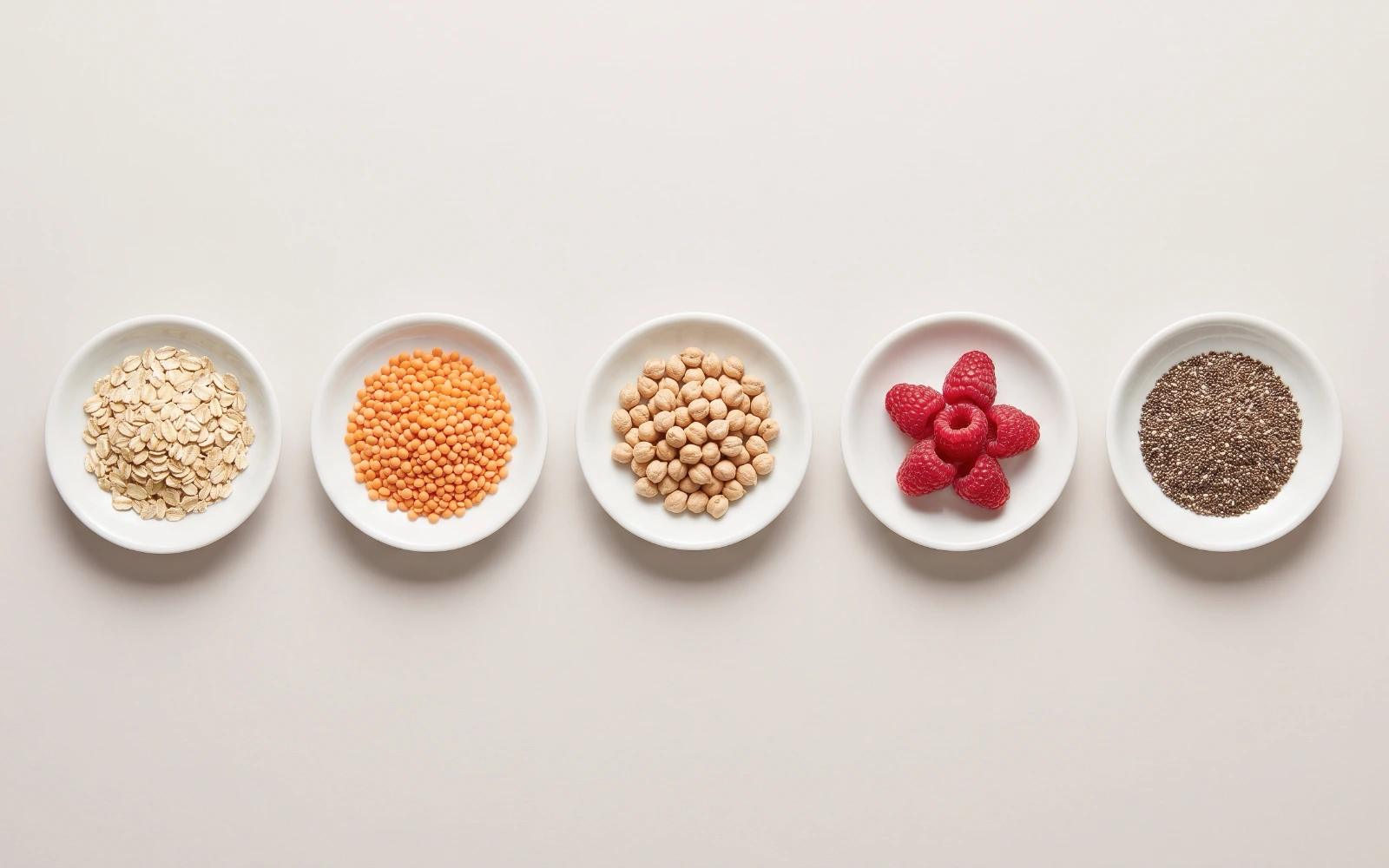
General advice like "eat more fibre" is hard to act on because it doesn't say how much, or from where. Specific swaps with grams attached are easier to actually use: you can see which ones add up fastest for how little you'd have to change. Figures below are per serve, from Australian food composition data:
| Swap or addition | Fibre |
|---|---|
| Rolled oats, half a cup dry (40g) | 4g |
| Lentils, 100g, added to a dish | 5g |
| Chickpeas or baked beans, 100g | 6g |
| Kidney or cannellini beans, 100g | 6.5g |
| Wholemeal pasta, 100g cooked, instead of white | 4g |
| Wholemeal or multigrain bread, one slice | 3g |
| Carrot or sweet potato, 100g, skin on | 3.5g |
| Raspberries or blackberries, 100g | 6g |
| Almonds, peanuts or Brazil nuts, a small handful (30g) | 3g |
None of these require a different meal, just a different version of one you'd make anyway, or a handful of legumes stirred into something that's already on the stove. Two of these in a day, say rolled oats at breakfast and lentils added to dinner, is 9g before anything else is considered. Swapping a mid-afternoon snack for a small handful of nuts, or choosing fruit with edible skin left on, adds a few grams more without being a deliberate "fibre meal" at all.
Vegetable skin is worth calling out specifically: a reasonable amount of a vegetable's fibre sits in or near the skin, so peeling a carrot or sweet potato before cooking it removes some of what you'd otherwise get for free. Washing and leaving the skin on, where the vegetable and the recipe allow it, is one of the smallest possible changes on this list.
Working Out Where You Actually Stand
Most people underestimate or overestimate their own fibre intake without realising it, because it's not a nutrient anyone tracks casually the way they might track protein or sugar. A rough tally over two or three ordinary days, adding up the "Dietary Fibre" line from the nutrition panel on packaged items plus reasonable estimates for fresh food, gives a more useful starting point than guessing. It doesn't need to be precise to be useful: knowing whether you're sitting at 15g, 20g or 25g changes which swaps are worth prioritising.
Adding a Fibre Supplement, as One Option Among Several
A fibre supplement is one way to add fibre, not the only one, and not necessarily the first one to reach for. Food swaps carry other nutrients and cost less to incorporate into meals you already make; a supplement is useful mainly where it's genuinely hard to fit in enough food-based fibre on a given day, or where a consistent, measured amount matters more than variety of source. DULCI, for example, adds 7g of fibre per scoop and dissolves in hot or cold liquid, which makes it a straightforward daily addition for someone who wants a consistent number without planning it into a meal. It sits alongside the food swaps above as an option, not a replacement for them, and there's no reason to pick only one approach: a couple of food swaps plus a supplement on the days that need it is a reasonable combination too.
Going Gradually
Whichever combination of swaps and additions you use, the pace matters more than the method. Adding several grams a day works best introduced over a couple of weeks rather than all on day one, giving the gut time to adjust; a sudden jump from a low-fibre diet to several new high-fibre foods in the same week is the most common reason people find the increase uncomfortable and give up on it. There's no single correct order or combination here: pick two or three changes that fit what you already eat, hold them for a few weeks, let the gut adjust, then add more if you want to keep closing the gap. The target is a direction, not a single day's perfect scorecard: a week where most days land somewhere near the benchmark is more useful than one day that hits it exactly and several that don't.
Sources
- NHMRC, Nutrient Reference Values for Australia and New Zealand: Dietary Fibre
- FSANZ, Australian Food Composition Database