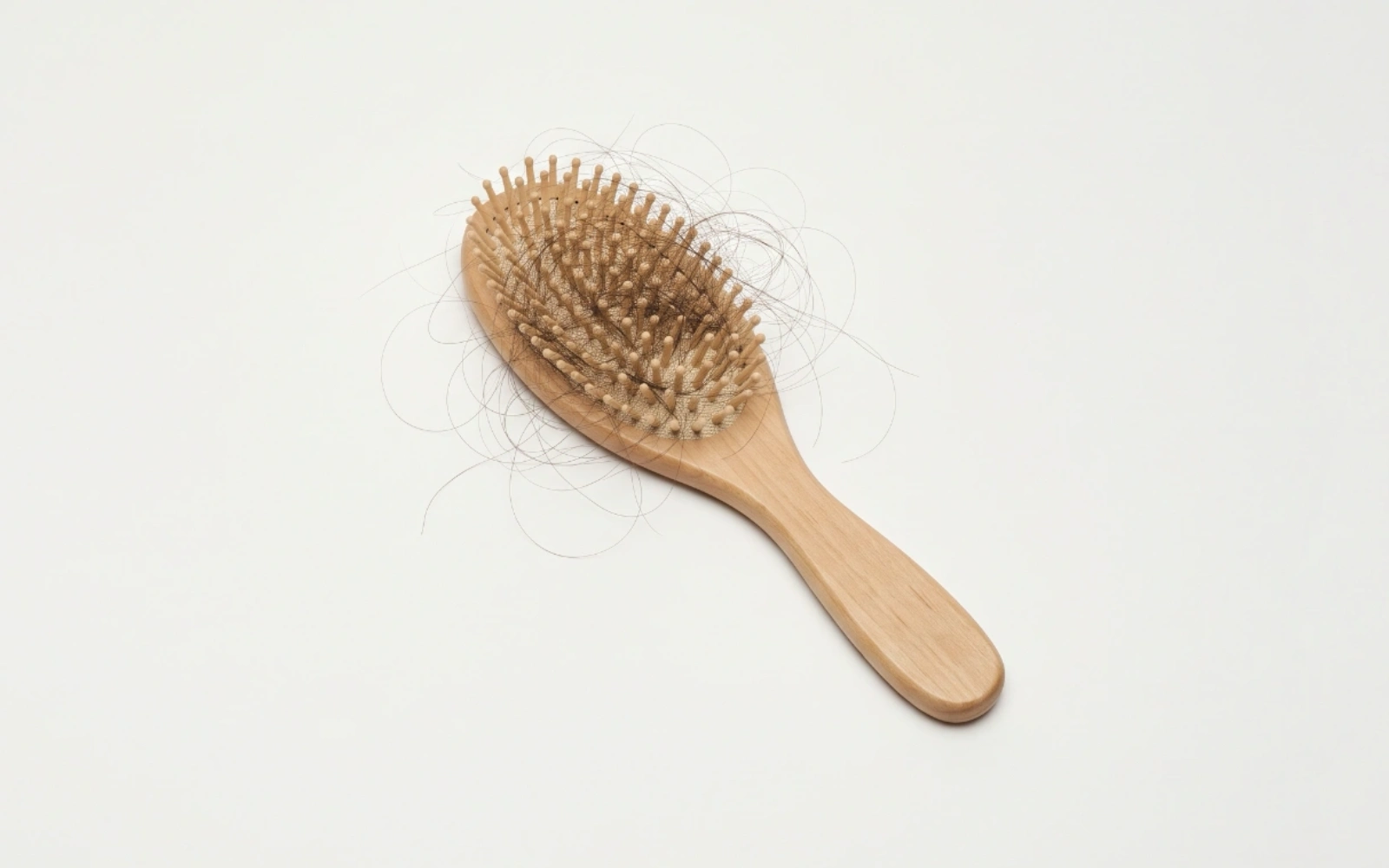
Two Types of Hair Loss. Both Connected to the Gut.
Hair loss is not one condition. The two most common forms are alopecia areata, an autoimmune condition in which the immune system attacks hair follicles, and androgenetic alopecia, the pattern hair loss driven by genetics and androgens that affects roughly 50% of men and 40% of women over a lifetime. They have different mechanisms and different presentations. Both now have peer-reviewed Mendelian randomization evidence linking them to the gut microbiome.
Mendelian randomization uses genetic variants as natural experiments to test causation rather than correlation. It is the closest the observational sciences can get to a controlled trial without directly intervening. When MR studies find a significant result, it is not a weak association. It is evidence of a causal pathway.
Hair loss has always been explained as something happening to you from the inside out. The research now suggests the inside starts further in than anyone assumed.
Alopecia Areata: The Gut-Autoimmune Connection
Alopecia areata is driven by immune dysregulation. The immune system loses tolerance to hair follicles and attacks them. What regulates immune tolerance? In large part, the gut microbiome.
A 2024 Mendelian randomization study published in Frontiers in Microbiology, drawing on FinnGen consortium data covering 394,105 controls, identified 16 specific gut bacterial taxa with significant causal associations with alopecia areata. The study found both risk and protective bacteria, confirming the relationship is bidirectional: certain gut bacteria contribute to AA development, while others appear to protect against it.
A 2025 PMC review examining the multi-faceted role of gut microbiota in alopecia areata confirmed that gut dysbiosis may disrupt intestinal barrier integrity and immune tolerance by affecting regulatory T cells, contributing to both disease onset and progression. The mechanism is consistent with what is known about autoimmune conditions broadly: a gut that fails to maintain immune balance is a gut that allows immune cells to become misdirected.
The FMT Finding That Changes the Conversation
The most striking evidence for the gut-hair connection does not come from an MR study. It comes from fecal microbiota transplantation case reports.
FMT involves transferring gut bacteria from a healthy donor into a recipient, typically to treat a gastrointestinal condition. In two separate documented cases, patients with alopecia areata who received FMT for unrelated gut conditions experienced unexpected hair regrowth. In one case, reported in the World Journal of Clinical Cases, a patient with AA experienced hair regrowth in the affected scalp, with some grey hairs gradually returning to their natural colour, following FMT for non-infectious diarrhoea. The gut was treated. The hair responded.
These are case reports, not controlled trials. They are not proof of universal efficacy. What they do is demonstrate, in living patients, that restoring the gut microbiome can influence hair follicle behaviour through the systemic pathways that the MR research identifies. The mechanism and the clinical observation align.
Androgenetic Alopecia: The Pattern Hair Loss Connection
Pattern hair loss is considered primarily genetic and hormonal. DHT, the androgen that miniaturises hair follicles, is the established driver. The gut connection here is less direct but increasingly documented.
A 2024 Frontiers in Microbiology MR study from Xiamen University found significant causal relationships between gut microbiota and androgenetic alopecia. The proposed mechanism involves androgen metabolism: the gut microbiome regulates how oestrogen and testosterone are processed and circulated, which in turn influences DHT levels and the hormonal environment that drives follicle miniaturisation.
A cross-sectional Korean study published in Frontiers in Microbiology comparing scalp and gut microbiome composition in androgenetic alopecia patients found distinct gut microbiome differences between AGA patients and healthy controls. The gut bacteria composition was measurably different in those experiencing pattern hair loss. Not just the scalp. The gut.
The gut regulates androgens. Androgens regulate hair follicles. A disrupted gut microbiome does not just affect digestion. It shifts the hormonal environment that determines how your hair grows.
What This Means in Practice
The research does not position gut health as a replacement for established hair loss treatments. Minoxidil, finasteride, and emerging JAK inhibitors for alopecia areata all have clinical evidence. The gut dimension adds something these treatments do not address: the systemic immune and hormonal environment in which the hair follicle operates.
A 2023 Frontiers in Microbiology review concluded that probiotics, prebiotics, and FMT therapies represent potential adjuvant therapeutic alternatives for alopecia areata. The gut, in other words, is a legitimate target alongside, not instead of, existing approaches.
DULCI provides 7g of clinically studied prebiotic fibre per scoop, an excellent source of fibre by the regulated standard. Prebiotic fibre feeds the beneficial bacteria responsible for short-chain fatty acid production, immune regulation, and androgen metabolism: the three mechanisms that the hair loss research consistently implicates. It supports the gut environment that the research links to it.
Nobody expects their hair loss to be a gut problem. That is precisely why so many people address it for years without addressing the underlying system that governs it.
The gut does not care what organ you are focused on. It runs the whole operation.