The Good News First
Coffee is not simply bad for your gut. The research is more interesting than that. A landmark study published in Nature Microbiology in November 2024, analysing gut microbiome data from more than 22,800 participants across US and UK populations, found that coffee drinkers had significantly higher levels of a specific beneficial gut bacterium. The association was strong enough that researchers could predict with 89% accuracy whether someone drank coffee just by analysing their gut microbiome.
A 2024 literature review published in Nutrients, covering research through to June 2024, found that moderate coffee consumption increased beneficial bacterial populations including Bifidobacterium while reducing less favourable ones. The polyphenols in coffee, particularly chlorogenic acid, appear to act as a prebiotic substrate, feeding bacteria that produce short-chain fatty acids. For moderate drinkers, coffee may be actively supporting microbiome diversity.
The relationship between coffee and your gut is not simply good or bad. It is highly individual, dose-dependent, and significantly affected by what you add to it.
Where It Gets Complicated
The picture changes when you look at how coffee affects gut function rather than just gut bacteria. Caffeine accelerates gut motility, the speed at which food moves through the digestive tract. For some people this is helpful. For others, it produces cramping, urgency, or loose stools, particularly when coffee is consumed on an empty stomach before anything else has entered the system.
Caffeine also stimulates gastric acid secretion. A 2021 study in Frontiers in Nutrition, examining over 3,000 adults, found that regular coffee drinkers had higher odds of IBS compared to non-drinkers, with the association stronger in women and in overweight individuals. The mechanism appears to involve caffeine's effects on the HPA axis, increasing cortisol, stimulating excess gastric acid, and blocking GABA receptors that would otherwise moderate gut irritability.
A separate 2023 systematic review and meta-analysis in Nutrients, covering 432,022 individuals, found the opposite: that coffee drinkers may have a reduced overall likelihood of developing IBS. Both findings are real. The contradiction is the point. Coffee's relationship with the gut is not linear. Who you are, how much you drink, and what you add to it all matter enormously.
The Real Culprit Is Usually What Goes In It
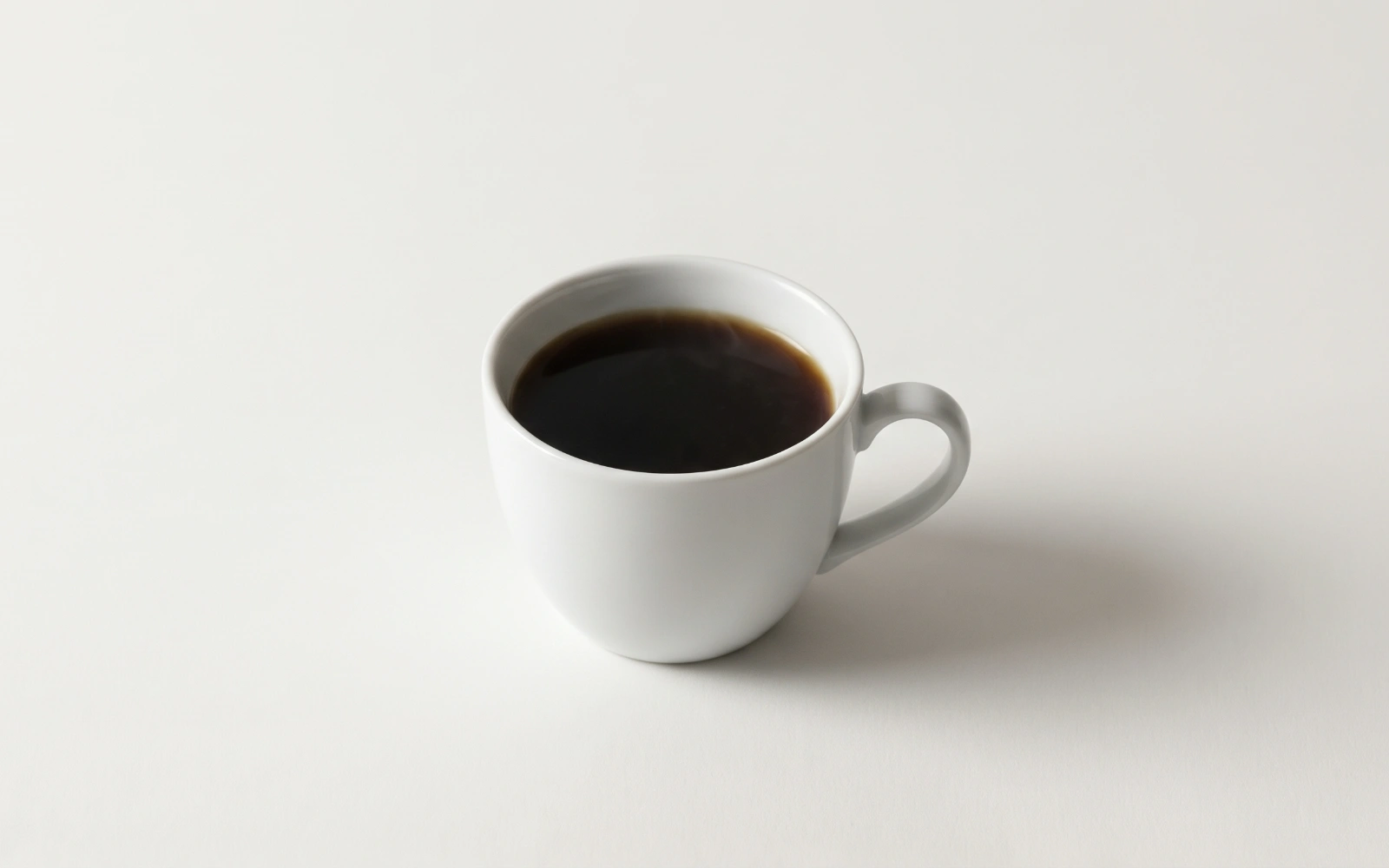
Black coffee is low-FODMAP. It contains no lactose, no fructose, no sugar alcohols. For most people with a functioning gut, black coffee is not the problem.
The problem is what most Australians actually drink. Full-cream milk or oat milk, flavoured syrups, multiple sugars, sweeteners. Each of these introduces compounds that can trigger bloating, gas, or discomfort in people with gut sensitivities. Lactose in dairy. High-fructose syrups in flavoured drinks. Certain sugar alcohols in some sweeteners. The coffee gets blamed. The actual culprits are the additions.
Most coffee-related gut symptoms are not coffee symptoms. They are dairy symptoms, sugar symptoms, or sweetener symptoms that happen to arrive in a coffee cup.
The Empty Stomach Question
Morning coffee on an empty stomach is particularly worth examining. Caffeine is absorbed faster without food present, producing a sharper cortisol spike and a more pronounced effect on gut motility. For people with healthy gut microbiomes and no underlying sensitivities, this is not typically harmful. For those with IBS, gastritis, acid reflux, or a disrupted microbiome, it can meaningfully aggravate symptoms before the day has started.
The practical implications are straightforward. Eating something before or alongside coffee buffers the gastric acid effect and slows caffeine absorption. Reducing the number of coffees per day matters more than eliminating it entirely. And what goes into the coffee deserves as much consideration as the coffee itself.
Making the Morning Better
DULCI dissolves in coffee. Hot or cold, black or white, it adds 7g of prebiotic fibre to the morning drink that was already happening, an excellent source of fibre by the regulated standard. It does not change the taste, the ritual, or the caffeine. What it does is turn the morning coffee into a daily fibre delivery, feeding the gut bacteria doing the real work underneath it.
If coffee is part of your morning, the gut-friendly version of it already exists. It just needs the right addition.
Your morning coffee is probably not destroying your gut. But it is almost certainly not helping it either. Two small changes can shift it from neutral to genuinely useful: what you put in it, and what you eat alongside it.
The cup is already there. Make it work harder.